The population of Asian elephants in China has steadily increased, and many scientific researches on Asian elephants have made new progress.
CCTV News:Yesterday (August 12th) was World Elephant Day. According to the authoritative release of National Forestry and Grassland Administration, the number of wild Asian elephants in China has increased to more than 300 at present, showing a gradual increase trend.
As an umbrella species, Asian elephants play an important role in maintaining biodiversity and maintaining the stability of the ecosystem in this area. Umbrella protection means that Asian elephants are protected and become umbrellas for other species in their habitats.
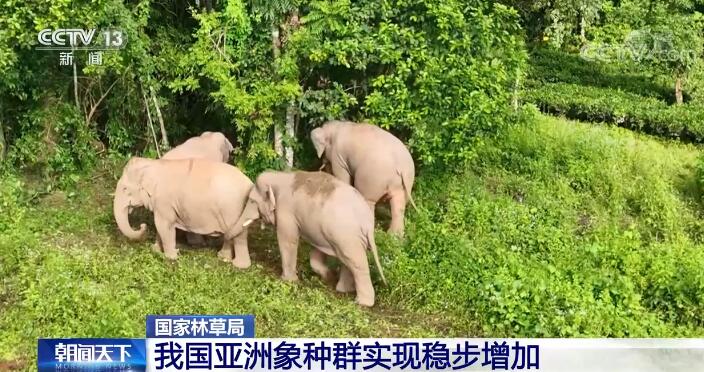
The distribution area and habitat of Asian elephants are continental tropical rain forests with high latitudes in the northern hemisphere, and there are more than 7,600 endangered wild animals and plants.
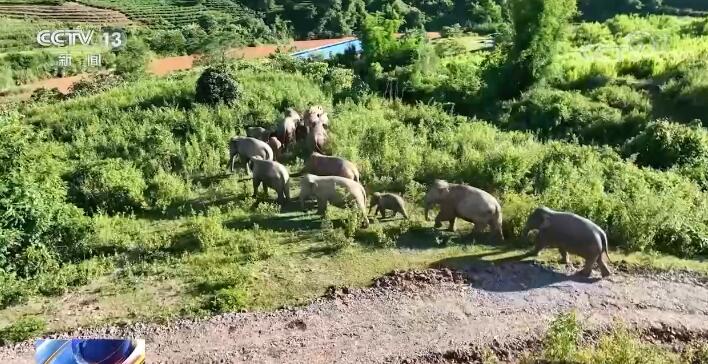
In order to protect Asian elephants and their habitats, China has taken a series of important measures: establishing nature reserves and other nature reserves, conducting long-term field patrol and habitat maintenance, and effectively ensuring the safety of the core population and key habitats of Asian elephants; The implementation of major projects such as wildlife protection and nature reserve construction has effectively curbed the trend of habitat reduction and gradually improved the living environment of Asian elephants; Construction of Asian elephant provenance breeding base and rescue center, and continuous field rescue and rescue; Formulate emergency plans for safety precautions, carry out population monitoring and early warning, build elephant prevention facilities, promote cross-border joint protection between China and Laos, and gradually increase the compensation standards for Asian elephants. Since the 14th Five-Year Plan, Yunnan has invested nearly 200 million yuan in the protection of Asian elephants.
With the increasing population of Asian elephants, it has become an important issue to control the border between humans and elephants and to live in harmony with them. China is building an Asian elephant protection, monitoring and early warning system to guard the "human elephant safety".
Many places in Yunnan have formed an Asian elephant monitoring and early warning system, which monitors the activities of Asian elephants by manual, infrared cameras, drones, etc., and promptly warns the people in the form of App, social software, and radio. Elephant-proof lights, elephant observation towers, elephant-avoiding booths and other facilities effectively reduce the contact between people and Asian elephants, effectively reduce the casualties in the conflict between people and elephants, and optimize the protection mechanism of wild Asian elephants.

Asian elephant monitor Diao Faxing:If the elephant moves and changes direction, we will give an early warning to inform the people, and we should be on high alert at any time. In this case, because it is close to the village, we should always have someone on duty here and keep an eye on its movements at all times.

With the further deepening of protection work, professional elephant protection teams have been set up in many places in Yunnan to carry out cross-regional linkage, with people following the elephant, one group and one policy, and precise management. At present, the first intelligent system integrating wildlife protection, monitoring and early warning has been built in China, and a professional elephant protection team has been set up to carry out integrated monitoring and early warning in the sky, air and earth.
With the deepening of the protection of Asian elephants, National Forestry and Grassland Administration, together with many departments and scientific research units, is carrying out research on the habitat suitability analysis and genetic diversity investigation of Asian elephants, so as to provide scientific support for the scientific protection of Asian elephants.
In 2020, the Asian Elephant Research Center was established in China, and special scientific investigations were carried out in the aspects of Asian elephant behavior, genetics, habitat and human-elephant conflict. From the current survey, the behavior habits, feeding habits and distribution areas of Asian elephants have changed greatly. For example, everyone thought that Asian elephants slept standing up before, but it turned out that this was not the case; It used to be thought that Asian elephants only ate elephant grass and banana, but as a result, they basically ate pitaya, pineapple, sugarcane, corn and rice, and all the crops planted by ordinary people; In addition, scientific research on genetic diversity and gene sequence of Asian elephants is being carried out in depth. On August 12th, National Forestry and Grassland Administration, National Endangered Wildlife Germplasm Center and other institutions launched the Asian elephant research big data platform.
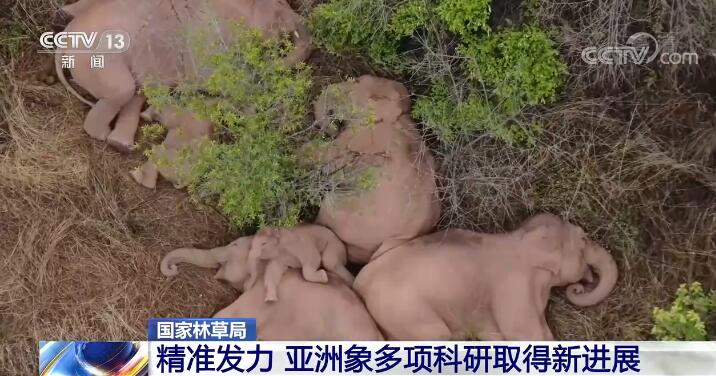
Chen Jianjun, Project Leader of Asian Elephant Research Big Data Platform:Using the technology of big data, we can make genealogy, register accounts and find objects for Asian elephants, so that they can eat well and live well, and the population can develop healthily and sustainably.
The research team also continued to monitor the elephants moving from the north to the south, the Menghai elephant group and the Olive Dam elephant group, and combined remote sensing images in Mojiang, Yuanjiang, Emei and Jinning to assist the local government in formulating monitoring, early warning and preventive measures in time. Combining the habitat demand of Asian elephant species and the actual production demand of community people, it provides scientific support for alleviating the conflict between people and elephants, ensuring people’s lives and property and protecting the safety of wild elephants.